𝗘𝗫𝗖𝗟𝗨𝗦𝗜𝗩𝗘 𝗠𝗘𝗗𝗜𝗔 𝗜𝗡𝗧𝗘𝗥𝗩𝗜𝗘W
“𝗦𝗵𝗮𝗱𝗼𝘄𝘀 𝗼𝗳 𝗙𝗼𝘂𝗺𝗯𝗮𝗻: 𝗪𝗵𝗲𝗻 𝗛𝗶𝘀𝘁𝗼𝗿𝘆 𝗧𝗮𝗸𝗲𝘀 𝘁𝗵𝗲 𝗦𝘁𝗮𝗴𝗲 𝗮𝗻𝗱 𝗮 𝗡𝗮𝘁𝗶𝗼𝗻 𝗘𝘅𝗮𝗺𝗶𝗻𝗲𝘀 𝗜𝘁𝘀𝗲𝗹𝗳”
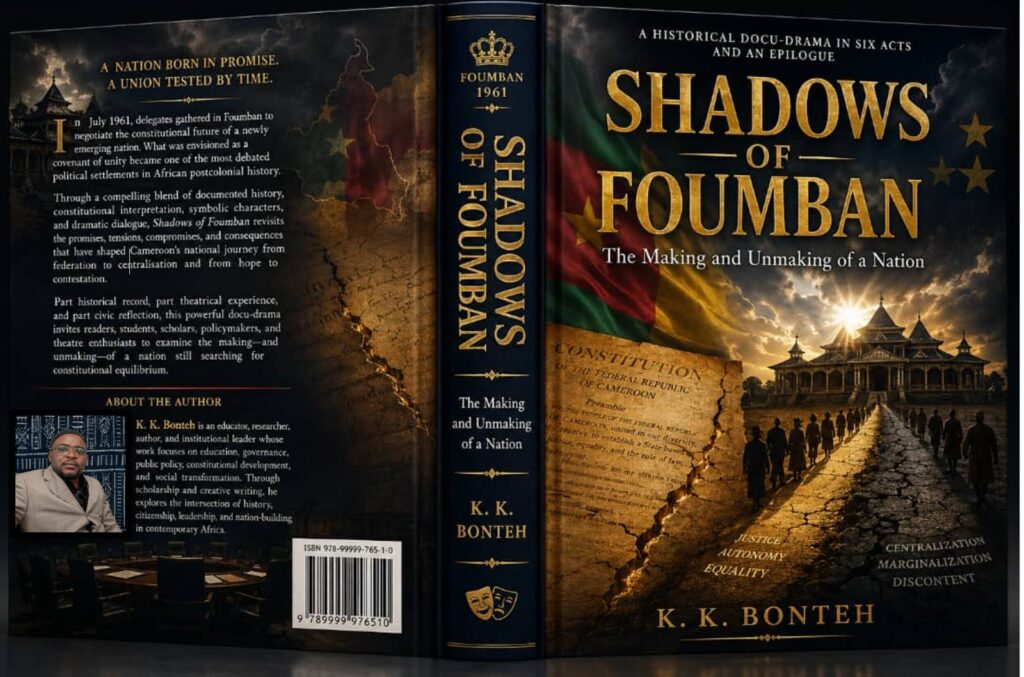
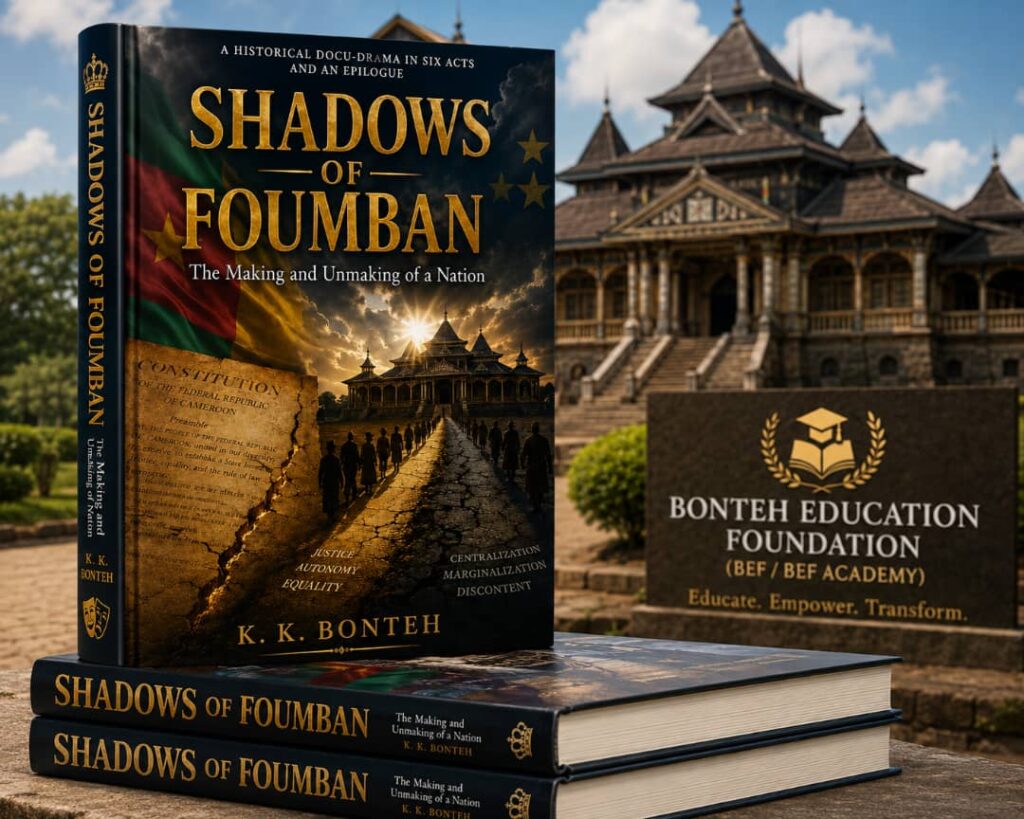
A Special Interview with K. K. Bonteh, Author of *𝗦𝗛𝗔𝗗𝗢𝗪𝗦 𝗢𝗙 𝗙𝗢𝗨𝗠𝗕𝗔𝗡: 𝗧𝗵𝗲 𝗠𝗮𝗸𝗶𝗻𝗴 𝗮𝗻𝗱 𝗨𝗻𝗺𝗮𝗸𝗶𝗻𝗴 𝗼𝗳 𝗮 𝗡𝗮𝘁𝗶𝗼𝗻 – 𝗔 𝗛𝗶𝘀𝘁𝗼𝗿𝗶𝗰𝗮𝗹 𝗗𝗼𝗰𝘂–𝗗𝗿𝗮𝗺𝗮 𝗶𝗻 𝗦𝗶𝘅 𝗔𝗰𝘁𝘀 𝗮𝗻𝗱 𝗮𝗻 𝗘𝗽𝗶𝗹𝗼𝗴𝘂𝗲
𝗜𝗡𝗧𝗘𝗥𝗩𝗜𝗘𝗪𝗘𝗥:
Mr Bonteh, thank you for granting us this interview.
Having carefully read Shadows of Foumban, I must confess that I was expecting a historical play. What I discovered instead was something far more ambitious. This is history, constitutional reflection, political theatre, civic education, and national introspection woven into a single dramatic tapestry.
The work opens not in Foumban itself but in what you call The Court of Origins, where Germany, Britain, France, Memory, Justice, Unity, and even Cameroon itself become dramatic voices. It immediately reminded me of the grand allegorical traditions of Shakespeare, Brecht, Soyinka, and even the medieval morality plays.
What inspired you to write this remarkable drama?
𝗞. 𝗞. 𝗕𝗢𝗡𝗧𝗘𝗛:
Thank you very much.
The inspiration came from a simple but profound realization: many Cameroonians know that Foumban happened, but relatively few fully appreciate why Foumban still matters.
I wanted to create a work that would allow readers not merely to study constitutional history but to experience it emotionally, intellectually, and dramatically.
The Foumban Conference of 1961 was more than a political meeting. It was a defining moment in the making of modern Cameroon. It represented the meeting of different colonial experiences, legal traditions, educational systems, administrative cultures, hopes, fears, and visions of nationhood.
Theatre possesses a unique power to humanise history.
Documents record decisions.
Drama reveals the hopes, anxieties, silences, ambitions, compromises, and contradictions behind those decisions.
That is precisely what Shadows of Foumban seeks to do.
𝗜𝗡𝗧𝗘𝗥𝗩𝗜𝗘𝗪𝗘𝗥:
One thing that struck me immediately is that your principal character is not actually a person.
In many respects, the protagonist seems to be Cameroon itself.
The Constitution speaks.
Memory speaks.
Justice speaks.
The State speaks.
The Flag speaks.
Why did you choose such an unconventional dramatic structure?
𝗞. 𝗞. 𝗕𝗢𝗡𝗧𝗘𝗛:
Because the issues explored in the play transcend individual personalities.
Specific political leaders come and go.
Governments change.
Generations pass.
But institutions endure.
Constitutions endure.
Historical memories endure.
National questions endure.
I therefore wanted to dramatise ideas rather than merely dramatise individuals.
When The Constitution speaks, it becomes a living covenant.
When Memory speaks, it represents the collective recollection of a people.
When Justice speaks, it becomes the moral conscience of history.
When The State speaks, it embodies the continuity of governmental authority.
This approach allows readers to engage with constitutional questions at a deeper philosophical level rather than merely through partisan or political lenses.
𝗜𝗡𝗧𝗘𝗥𝗩𝗜𝗘𝗪𝗘𝗥:
The title itself is intriguing.
Why Shadows of Foumban?
Why not simply The Foumban Conference or The Birth of Cameroon?
𝗞. 𝗞. 𝗕𝗢𝗡𝗧𝗘𝗛:
Because the drama is not only about what happened at Foumban.
It is also about what followed.
The conference produced a constitutional covenant.
But like all major constitutional moments, it left questions, interpretations, expectations, and ambiguities.
The “shadows” represent those lingering constitutional echoes that continue to influence contemporary discussions about governance, identity, decentralisation, federalism, national integration, citizenship, and reconciliation.
In the play, Foumban becomes more than a place.
It becomes a question.
A question that continues to echo through history.
𝗜𝗡𝗧𝗘𝗥𝗜𝗘𝗪𝗘𝗥:
One of the most powerful scenes for me was the debate between the advocates of federal autonomy and those advocating stronger central authority.
The dialogue is intellectually sophisticated and surprisingly balanced.
You seem determined not to demonise either side.
Was that intentional?
𝗞. 𝗞. 𝗕𝗢𝗡𝗧𝗘𝗛:
Absolutely.
The objective of the play is understanding, not accusation.
History becomes dangerous when it is reduced to heroes and villains.
Real constitutional debates are rarely that simple.
Those who emphasised national unity believed they were protecting stability.
Those who emphasised federal safeguards believed they were protecting diversity.
Both positions emerged from legitimate concerns.
My task as a dramatist was not to pass judgment but to create a space where audiences could hear those competing visions and reflect upon them critically.
The theatre becomes a forum for dialogue rather than a platform for condemnation.
𝗜𝗡𝗧𝗘𝗥𝗩𝗜𝗘𝗪𝗘𝗥:
I was fascinated by your recurring phrase:
“A nation is not finished by ink, but by the memory of those who believe in it.”
That sentence appears almost like the philosophical heartbeat of the entire book.
What does it mean to you?
𝗞. 𝗞. 𝗕𝗢𝗡𝗧𝗘𝗛:
It means that nation-building cannot be reduced to constitutional documents alone.
Constitutions are important.
Laws are important.
Institutions are important.
But nations ultimately survive because people believe in them.
A signature may establish a state.
Only trust sustains it.
Only participation strengthens it.
Only inclusion legitimises it.
Only shared memory preserves it.
The statement reminds us that nationhood is not merely a legal arrangement; it is also a moral and emotional commitment.
𝗜𝗡𝗧𝗘𝗥𝗩𝗜𝗘𝗪𝗘𝗥:
The work also appears remarkably educational.
There are historical notes, study guides, timelines, glossaries, essay topics, discussion questions, and appendices.
One gets the impression that this is not only a theatrical work but also a civic education project.
𝗞. 𝗞. 𝗕𝗢𝗡𝗧𝗘𝗛:
That observation is correct.
I deliberately designed the book to function on multiple levels.
A general reader may enjoy it as drama.
A student may use it for historical study.
A teacher may use it in civic education.
A researcher may explore its constitutional themes.
A theatre practitioner may stage it.
A policymaker may reflect upon its questions.
The objective is to create a work that encourages informed dialogue across generations.
If the play stimulates discussion, scholarship, civic reflection, and greater historical awareness, then it has fulfilled its purpose.
𝗜𝗡𝗧𝗘𝗥𝗩𝗜𝗘𝗪𝗘𝗥:
Reading the play, I was repeatedly reminded of major political dramas across the world.
One encounters echoes of Shakespeare’s historical plays, Brecht’s political theatre, Soyinka’s engagement with power and memory, and Ngũgĩ wa Thiong’o’s concern with postcolonial identity.
Were these influences conscious?
𝗞. 𝗞. 𝗕𝗢𝗡𝗧𝗘𝗛:
Certainly.
Every writer stands within a tradition.
I have always admired writers who use theatre to interrogate society.
Shakespeare transformed political conflict into timeless drama.
Brecht transformed theatre into critical reflection.
Soyinka explored the relationship between power, culture, ritual, and history.
Ngũgĩ demonstrated how literature can participate in national conversations.
While Shadows of Foumban is distinctly Cameroonian, it also belongs to that broader tradition of theatre as a vehicle for civic engagement and intellectual inquiry.
𝗜𝗡𝗧𝗘𝗥𝗩𝗜𝗘𝗪𝗘𝗥:
The later acts move into extremely sensitive territory, touching on constitutional amendments, centralisation, institutional grievances, and contemporary tensions.
Were you concerned about addressing such subjects?
𝗞. 𝗞. 𝗕𝗢𝗡𝗧𝗘𝗛:
History cannot be understood selectively.
If we celebrate achievements, we must also examine challenges.
The purpose is not to reopen wounds.
The purpose is to understand how nations evolve, how institutions change, and how differing interpretations of historical events can shape contemporary realities.
A mature nation must possess the confidence to reflect upon its own history honestly and constructively.
That is one of the central messages of the play.
𝗜𝗡𝗧𝗘𝗥𝗩𝗜𝗘𝗪𝗘𝗥:
Before we conclude, what would you like readers to take away from Shadows of Foumban?
𝗞. 𝗞. 𝗕𝗢𝗡𝗧𝗘𝗛:
I would like readers to leave with three convictions.
First, history matters.
Second, constitutions matter.
Third, dialogue matters.
No nation is perfect.
No constitutional arrangement is beyond improvement.
No generation possesses all the answers.
But societies progress when citizens engage thoughtfully with their past, participate responsibly in their present, and imagine constructively their future.
Ultimately, Shadows of Foumban is not about division.
It is about understanding.
It is about memory.
It is about nation-building.
And above all, it is about the continuing search for a Cameroon in which unity, justice, diversity, and dignity flourish together.
𝗙𝗜𝗡𝗔𝗟 𝗪𝗢𝗥𝗗
𝗜𝗡𝗧𝗘𝗥𝗩𝗜𝗘𝗪𝗘𝗥:
Having read 𝗦𝗵𝗮𝗱𝗼𝘄𝘀 𝗼𝗳 𝗙𝗼𝘂𝗺𝗯𝗮𝗻 from cover to cover, I am convinced that this is far more than a play.
It is a constitutional conversation.
It is a historical meditation.
It is a civic classroom.
It is a dramatic archive of memory.
Most importantly, it is an invitation to reflect upon the past in order to build a better future.
Whether one approaches it as literature, history, political thought, theatre, or civic education, the work stands as a significant contribution to contemporary Cameroonian letters and to the broader tradition of African political drama.
𝗞. 𝗞. 𝗕𝗢𝗡𝗧𝗘𝗛:
Thank you.
My sincere hope is that the play encourages reflection rather than division, understanding rather than misunderstanding, and dialogue rather than silence.
If readers emerge with a deeper appreciation of history, constitutional development, and the responsibilities of citizenship, then the purpose of the work will have been achieved.
For nations, like individuals, grow stronger when they understand their own stories.
𝗔𝗕𝗢𝗨𝗧 𝗧𝗛𝗘 𝗔𝗨𝗧𝗛𝗢𝗥
K. K. Bonteh is a Cameroonian educator, pedagogic inspector, researcher, dramatist, author, journalist, and educational innovator. His work spans education, bilingualism, theatre, public policy, cultural studies, peace-building, and national development. Through 𝗦𝗵𝗮𝗱𝗼𝘄𝘀 𝗼𝗳 𝗙𝗼𝘂𝗺𝗯𝗮𝗻: 𝗧𝗵𝗲 𝗠𝗮𝗸𝗶𝗻𝗴 𝗮𝗻𝗱 𝗨𝗻𝗺𝗮𝗸𝗶𝗻𝗴 𝗼𝗳 𝗮 𝗡𝗮𝘁𝗶𝗼𝗻, he brings constitutional history, political memory, and dramatic imagination into a compelling literary conversation about the past, present, and future of Cameroon.