
𝗖𝗔𝗟𝗟 𝗙𝗢𝗥 𝗣𝗥𝗢𝗙𝗘𝗦𝗦𝗜𝗢𝗡𝗔𝗟 𝗥𝗘𝗩𝗜𝗘𝗪, 𝗖𝗥𝗜𝗧𝗜𝗤𝗨𝗘 𝗔𝗡𝗗 𝗥𝗘𝗖𝗢𝗠𝗠𝗘𝗡𝗗𝗔𝗧𝗜𝗢𝗡𝗦
Towards a New Educational Paradigm for the Fourth Industrial Revolution and Sustainable Human Development
Dear Colleagues and Esteemed Educational Stakeholders,
Over the years, educational systems across the world have undergone significant reforms aimed at improving learning outcomes and preparing learners for the demands of an increasingly complex society. One of the most notable reforms has been the transition from the traditional teacher-centred and examination-oriented approach to the Competency-Based Approach (CBA), which places greater emphasis on learner participation, skills acquisition, and the development of competencies for life and work.
While this paradigm shift has undoubtedly represented a major advancement in educational thinking and practice, the rapid emergence of Artificial Intelligence, digital technologies, automation, robotics, data science, entrepreneurship, and the broader realities of the Fourth Industrial Revolution compel us to re-examine whether our current pedagogical models are sufficiently preparing learners for the future.
It is my conviction that education in the twenty-first century must move beyond the acquisition of knowledge and competencies alone. Learners must also be empowered to become innovators, creators, entrepreneurs, leaders, problem-solvers, and agents of transformation within their communities and the wider global society.
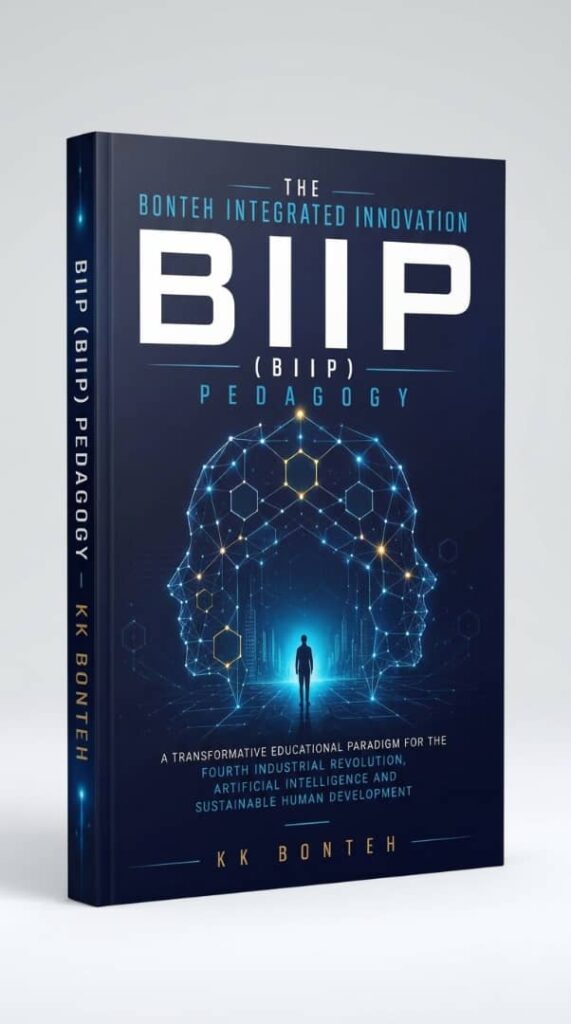
It is against this backdrop that I have been developing a complementary pedagogical framework known as the 𝗕𝗼𝗻𝘁𝗲𝗵 𝗜𝗻𝘁𝗲𝗴𝗿𝗮𝘁𝗲𝗱 𝗜𝗻𝗻𝗼𝘃𝗮𝘁𝗶𝗼𝗻 𝗣𝗲𝗱𝗮𝗴𝗼𝗴𝘆 (𝗕𝗜𝗜𝗣).
BIIP is not intended to replace existing educational approaches. Rather, it seeks to complement and enrich them by extending the learning continuum from:
𝗞𝗻𝗼𝘄𝗹𝗲𝗱𝗴𝗲 → 𝗦𝗸𝗶𝗹𝗹𝘀 → 𝗜𝗻𝗻𝗼𝘃𝗮𝘁𝗶𝗼𝗻 → 𝗧𝗿𝗮𝗻𝘀𝗳𝗼𝗿𝗺𝗮𝘁𝗶𝗼𝗻
The proposed framework is rooted in African realities while remaining globally relevant and adaptable. It seeks to integrate:
• Innovation and Creativity
• Artificial Intelligence Literacy
• Digital Competencies
• Entrepreneurship Education
• Leadership Development
• Character Formation
• Research and Problem-Solving
• Community Engagement
• Environmental Sustainability
• Lifelong Learning
Through its five-stage instructional cycle—𝗘𝗻𝗴𝗮𝗴𝗲, 𝗘𝘅𝗽𝗹𝗼𝗿𝗲, 𝗘𝘅𝗽𝗹𝗮𝗶𝗻, 𝗜𝗻𝗻𝗼𝘃𝗮𝘁𝗲, and 𝗧𝗿𝗮𝗻𝘀𝗳𝗼𝗿𝗺—BIIP seeks to ensure that every lesson generates not only learning outcomes but also innovative ideas, practical solutions, and measurable societal impact.
I therefore respectfully invite educational experts, pedagogic inspectors, curriculum developers, teacher trainers, researchers, classroom practitioners, policymakers, development partners, and all stakeholders in education to review the attached Manifesto and Press Kit on the Bonteh Integrated Innovation Pedagogy (BIIP).
Your professional observations, constructive criticism, recommendations, suggestions for improvement, and scholarly insights will be highly appreciated. Such contributions will be invaluable in strengthening the framework and ensuring that it meets international standards of educational relevance, effectiveness, inclusiveness, and sustainability.
Education is a collective responsibility, and meaningful educational innovation can only flourish through collaboration, dialogue, research, and continuous improvement.
I look forward to receiving your comments, recommendations, and expert perspectives as we collectively reflect on how best to prepare present and future generations for a rapidly changing world.
Together, let us move beyond educating learners merely to know and do, towards empowering them to innovate, transform, and lead.
𝗘𝗱𝘂𝗰𝗮𝘁𝗲 • 𝗜𝗻𝗻𝗼𝘃𝗮𝘁𝗲 • 𝗧𝗿𝗮𝗻𝘀𝗳𝗼𝗿𝗺
Respectfully,
#K.K. BONTEH
Pedagogic Inspector | Curriculum Developer | Educational Innovator
Founder, Bonteh Integrated Innovation Pedagogy (BIIP)
….
𝐓𝐇𝐄 𝐘𝐀𝐎𝐔𝐍𝐃É 𝐌𝐀𝐍𝐈𝐅𝐄𝐒𝐓𝐎
𝐅𝐎𝐑 𝐓𝐇𝐄 𝐁𝐎𝐍𝐓𝐄𝐇 𝐈𝐍𝐓𝐄𝐆𝐑𝐀𝐓𝐄𝐃 𝐈𝐍𝐍𝐎𝐕𝐀𝐓𝐈𝐎𝐍 𝐏𝐄𝐃𝐀𝐆𝐎𝐆𝐘 (𝐁𝐈𝐈𝐏)
From Education for Survival to Education for Transformation
A Global Call to Reimagine Learning, Innovation, Leadership, and Human Flourishing
𝐏𝐑𝐄𝐀𝐌𝐁𝐋𝐄
We stand at a defining moment in human history.
The world our educational systems were designed to serve no longer exists.
The factories that inspired our classrooms are changing.
The careers for which many schools prepare learners are disappearing.
The knowledge once stored in textbooks now resides in digital networks.
Artificial Intelligence is transforming industries.
Climate change is reshaping societies.
Innovation is redefining economies.
And yet, millions of learners continue to sit in classrooms designed for a bygone age.
Across continents, educational systems continue to reward memorisation while the world rewards innovation.
Schools prepare learners to answer questions while society requires them to solve problems.
Examinations measure recall while communities need creativity.
Certificates accumulate while unemployment rises.
Knowledge expands while wisdom diminishes.
Humanity can no longer afford an educational system that prepares learners for yesterday.
The future demands something different.
The future demands transformation.
The future demands BIIP.
𝐎𝐔𝐑 𝐁𝐄𝐋𝐈𝐄𝐅
We believe that every learner is more than a candidate for examinations.
Every learner is:
An Innovator Waiting to Create
A Leader Waiting to Emerge
A Researcher Waiting to Discover
An Entrepreneur Waiting to Build
A Citizen Waiting to Contribute
A Human Being Waiting to Flourish
Education must therefore move beyond the transmission of knowledge and become the liberation of human potential.
𝐎𝐔𝐑 𝐕𝐈𝐒𝐈𝐎𝐍
We envision a world where education produces not merely knowledgeable individuals but transformative citizens capable of improving themselves, their communities, their nations, and humanity.
We envision schools becoming centres of innovation rather than centres of information.
We envision teachers becoming architects of possibility rather than transmitters of content.
We envision learners becoming creators of solutions rather than consumers of answers.
We envision educational systems becoming engines of sustainable development.
We envision a future where every classroom becomes a laboratory of hope.
𝐎𝐔𝐑 𝐌𝐈𝐒𝐒𝐈𝐎𝐍
Our mission is to transform education into a catalyst for innovation, leadership, entrepreneurship, sustainability, research, ethical citizenship, and lifelong learning.
We seek to create educational ecosystems that empower learners to:
• Think critically;
• Create courageously;
• Lead ethically;
• Innovate continuously;
• Serve responsibly;
• Learn throughout life.
𝐎𝐔𝐑 𝐃𝐄𝐂𝐋𝐀𝐑𝐀𝐓𝐈𝐎𝐍
We declare that:
Education must no longer be measured solely by examinations.
Learning must no longer end with graduation.
Innovation must become a core educational outcome.
Artificial Intelligence must be integrated responsibly into learning.
Entrepreneurship must become an essential life competency.
Sustainability must become a central educational priority.
Communities must become active educational partners.
Every learner must be empowered to create value for society.
𝐎𝐔𝐑 𝐏𝐇𝐈𝐋𝐎𝐒𝐎𝐏𝐇𝐘
The Bonteh Integrated Innovation Pedagogy is founded upon a simple but powerful conviction:
𝐄𝐯𝐞𝐫𝐲 𝐥𝐞𝐚𝐫𝐧𝐞𝐫 𝐜𝐚𝐧 𝐥𝐞𝐚𝐫𝐧, 𝐜𝐫𝐞𝐚𝐭𝐞, 𝐢𝐧𝐧𝐨𝐯𝐚𝐭𝐞, 𝐥𝐞𝐚𝐝, 𝐚𝐧𝐝 𝐭𝐫𝐚𝐧𝐬𝐟𝐨𝐫𝐦.
Learning is not merely the acquisition of knowledge.
Learning is the transformation of potential into impact.
Education must therefore cultivate:
Knowledge
Competence
Innovation
Character
Leadership
Citizenship
Sustainability
Human Flourishing
𝐓𝐇𝐄 𝐁𝐈𝐈𝐏 𝐏𝐋𝐄𝐃𝐆𝐄
We pledge to promote educational systems that:
• Inspire curiosity;
• Reward creativity;
• Encourage experimentation;
• Celebrate innovation;
• Foster resilience;
• Develop ethical leadership;
• Promote lifelong learning;
• Strengthen communities;
• Advance sustainable development.
We reject educational models that reduce learners to examination statistics.
We embrace educational approaches that unlock human potential.
𝐓𝐇𝐄 𝐁𝐈𝐈𝐏 𝐄𝐐𝐔𝐀𝐓𝐈𝐎𝐍
The future of education can be expressed through a new educational formula:
𝐊𝐧𝐨𝐰𝐥𝐞𝐝𝐠𝐞
•
𝐂𝐨𝐦𝐩𝐞𝐭𝐞𝐧𝐜𝐞
•
𝐈𝐧𝐧𝐨𝐯𝐚𝐭𝐢𝐨𝐧
•
𝐂𝐡𝐚𝐫𝐚𝐜𝐭𝐞𝐫
•
𝐋𝐞𝐚𝐝𝐞𝐫𝐬𝐡𝐢𝐩
•
𝐂𝐨𝐦𝐦𝐮𝐧𝐢𝐭𝐲 𝐈𝐦𝐩𝐚𝐜𝐭
=
𝐓𝐫𝐚𝐧𝐬𝐟𝐨𝐫𝐦𝐚𝐭𝐢𝐯𝐞 𝐄𝐝𝐮𝐜𝐚𝐭𝐢𝐨𝐧
This is the heart of BIIP.
𝐀 𝐂𝐀𝐋𝐋 𝐓𝐎 𝐆𝐎𝐕𝐄𝐑𝐍𝐌𝐄𝐍𝐓𝐒
We call upon governments to:
• Reimagine educational policy;
• Reform assessment systems;
• Invest in innovation-driven learning;
• Empower teachers;
• Strengthen educational technology;
• Promote educational research;
• Support entrepreneurship education.
The future competitiveness of nations depends upon the future readiness of their educational systems.
𝐀 𝐂𝐀𝐋𝐋 𝐓𝐎 𝐓𝐄𝐀𝐂𝐇𝐄𝐑𝐒
We call upon teachers to become:
Mentors
Innovators
Researchers
Facilitators
Leaders
The future teacher is not a dispenser of information but a cultivator of human potential.
𝐀 𝐂𝐀𝐋𝐋 𝐓𝐎 𝐋𝐄𝐀𝐑𝐍𝐄𝐑𝐒
We call upon learners to:
• Question boldly;
• Dream courageously;
• Create relentlessly;
• Lead responsibly;
• Serve selflessly.
The future belongs to those who can learn, unlearn, and relearn.
𝐀 𝐂𝐀𝐋𝐋 𝐓𝐎 𝐀𝐅𝐑𝐈𝐂𝐀
Africa possesses the world’s greatest educational opportunity.
Its youthful population represents not a challenge but a strategic advantage.
The continent can become a global leader in educational innovation.
Africa need not merely adopt educational models developed elsewhere.
Africa can create educational paradigms for the world.
BIIP is offered as one such contribution.
𝐀 𝐂𝐀𝐋𝐋 𝐓𝐎 𝐓𝐇𝐄 𝐖𝐎𝐑𝐋𝐃
The challenges facing humanity transcend borders.
So too must educational solutions.
BIIP is rooted in Africa.
It is inspired by Cameroon.
But its vision is global.
Its purpose is universal.
Its ambition is transformational.
𝐖𝐇𝐀𝐓 𝐈𝐒 𝐁𝐈𝐈𝐏?
𝐓𝐇𝐄 𝐁𝐈𝐈𝐏 𝐓𝐇𝐄𝐎𝐑𝐘 𝐎𝐅 𝐓𝐑𝐀𝐍𝐒𝐅𝐎𝐑𝐌𝐀𝐓𝐈𝐕𝐄 𝐋𝐄𝐀𝐑𝐍𝐈𝐍𝐆
The Bonteh Integrated Innovation Pedagogy (BIIP) is both an educational theory and a transformative pedagogical paradigm developed to address the limitations of traditional, examination-driven, and competency-based educational systems in an era characterised by Artificial Intelligence, rapid technological advancement, sustainable development imperatives, and global interconnectedness.
As a theory, BIIP posits that meaningful education occurs when knowledge acquisition, competency development, innovation, research, entrepreneurship, leadership formation, community engagement, and lifelong learning are integrated within a single educational ecosystem.
BIIP therefore rejects the notion that education should merely transmit knowledge or develop isolated competencies. Instead, it argues that education should cultivate the learner’s capacity to investigate problems, generate solutions, create value, transform communities, and contribute to sustainable human development.
The central proposition of the BIIP Theory may be stated as follows:
The ultimate purpose of education is not merely to produce knowledgeable individuals or competent workers, but to develop innovative, ethical, entrepreneurial, and transformative citizens capable of improving society through continuous learning, creative problem-solving, and responsible leadership.
Unlike conventional educational models that focus primarily on content mastery or skill acquisition, BIIP conceptualises learning as a continuous cycle of observation, inquiry, creation, innovation, implementation, reflection, and transformation.
The theory is built upon eight interconnected pillars:
Knowledge Acquisition
Competency Development
Innovation Creation
Research and Inquiry
Entrepreneurship and Value Creation
Character and Leadership Formation
Community Impact
Lifelong Learning
Together, these pillars form a holistic framework for human development.
𝐓𝐇𝐄 𝐁𝐈𝐈𝐏 𝐓𝐇𝐄𝐎𝐑𝐄𝐓𝐈𝐂𝐀𝐋 𝐏𝐑𝐎𝐏𝐎𝐒𝐈𝐓𝐈𝐎𝐍
The BIIP Theory asserts that:
The quality of education should be measured not by what learners know, but by what learners are able to create, improve, solve, lead, innovate, and transform.
Accordingly, learning becomes successful when it produces measurable positive outcomes in the learner, the community, and society.
𝐓𝐇𝐄 𝐁𝐈𝐈𝐏 𝐋𝐄𝐀𝐑𝐍𝐈𝐍𝐆 𝐄𝐐𝐔𝐀𝐓𝐈𝐎𝐍
The theoretical foundation of BIIP may be represented as:
𝐊 + 𝐂 + 𝐈 + 𝐑 + 𝐄 + 𝐋 + 𝐂𝐈 + 𝐋𝐋 = 𝐓𝐇
Where:
K = Knowledge
C = Competence
I = Innovation
R = Research
E = Entrepreneurship
L = Leadership
CI = Community Impact
LL = Lifelong Learning
TH = Transformative Human Development
This equation represents the core theoretical model underpinning BIIP.
𝐓𝐇𝐄 𝐁𝐈𝐈𝐏 𝐏𝐀𝐑𝐀𝐃𝐈𝐆𝐌
As a paradigm, BIIP redefines education as:
A dynamic process through which learners acquire knowledge, develop competencies, create innovations, solve societal problems, generate sustainable value, and contribute to the flourishing of humanity.
Thus, BIIP is not merely:
• A teaching method;
• A curriculum model;
• An assessment framework;
• A school improvement strategy;
It is simultaneously all four.
BIIP functions as a comprehensive:
𝐄𝐝𝐮𝐜𝐚𝐭𝐢𝐨𝐧𝐚𝐥 𝐎𝐩𝐞𝐫𝐚𝐭𝐢𝐧𝐠 𝐒𝐲𝐬𝐭𝐞𝐦 (𝐄𝐝𝐮𝐜𝐚𝐭𝐢𝐨𝐧 𝐎𝐒)
designed to guide educational transformation at classroom, institutional, national, continental, and global levels.
This addition strengthens the manifesto significantly because it:
1. Defines BIIP as an original educational theory.
2. States its central proposition clearly.
3. Introduces a memorable theoretical equation.
4. Distinguishes BIIP from traditional pedagogy and CBA.
5. Positions BIIP as an Education Operating System rather than merely a teaching approach.
6. Makes the manifesto suitable for ministries, universities, UNESCO-type organisations, researchers, and policy think tanks.
𝐓𝐇𝐄 𝐘𝐀𝐎𝐔𝐍𝐃É 𝐂𝐎𝐌𝐌𝐈𝐓𝐌𝐄𝐍𝐓
We commit ourselves to building educational systems that prepare learners not merely to pass examinations, but to transform the world.
We commit ourselves to education that promotes innovation, sustainability, leadership, and human flourishing.
We commit ourselves to educational transformation as the foundation of societal transformation.
𝐎𝐔𝐑 𝐅𝐈𝐍𝐀𝐋 𝐖𝐎𝐑𝐃
The future will not be built by those who memorise the most information.
The future will be built by those who can imagine what does not yet exist and possess the courage to create it.
Education must therefore become the art and science of cultivating innovators, visionaries, leaders, and builders of a better world.
That is the promise of BIIP.
That is the challenge before us.
That is the future we choose.
𝐓𝐇𝐄 𝐁𝐎𝐍𝐓𝐄𝐇 𝐈𝐍𝐓𝐄𝐆𝐑𝐀𝐓𝐄𝐃 𝐈𝐍𝐍𝐎𝐕𝐀𝐓𝐈𝐎𝐍 𝐏𝐄𝐃𝐀𝐆𝐎𝐆𝐘
Educate. Innovate. Transform.
From Competence to Innovation.
From Learning to Leadership.
From Education to Human Flourishing.
K. K. Bonteh
Founder, BIIP Movement
Pedagogic Inspector • Curriculum Developer • Educational Innovator
BEF Academy, Yaoundé, Cameroon
..
𝗣𝗥𝗘𝗦𝗦 𝗞𝗜𝗧
𝗧𝗛𝗘 𝗕𝗢𝗡𝗧𝗘𝗛 𝗜𝗡𝗧𝗘𝗚𝗥𝗔𝗧𝗘𝗗 𝗜𝗡𝗡𝗢𝗩𝗔𝗧𝗜𝗢𝗡 𝗣𝗘𝗗𝗔𝗚𝗢𝗚𝗬 (𝗕𝗜𝗜𝗣)
A Transformative Educational Paradigm for the Fourth Industrial Revolution, Artificial Intelligence and Sustainable Human Development
𝗙𝗢𝗥 𝗜𝗠𝗠𝗘𝗗𝗜𝗔𝗧𝗘 𝗥𝗘𝗟𝗘𝗔𝗦𝗘
𝗔 𝗡𝗘𝗪 𝗘𝗥𝗔 𝗜𝗡 𝗘𝗗𝗨𝗖𝗔𝗧𝗜𝗢𝗡
Introducing the Bonteh Integrated Innovation Pedagogy (BIIP)
The educational landscape is undergoing unprecedented transformation driven by globalization, Artificial Intelligence (AI), digital technologies, climate challenges, entrepreneurship, and the demands of the Fourth Industrial Revolution. In response to these realities, Cameroonian educational innovator and curriculum developer K. K. Bonteh proudly introduces the Bonteh Integrated Innovation Pedagogy (BIIP)—a groundbreaking educational paradigm designed to transform learners into innovators, problem-solvers, creators, leaders, and agents of societal transformation.
BIIP represents a paradigm shift from traditional knowledge transmission and conventional competency-based education toward a comprehensive innovation-driven educational ecosystem that prepares learners for the opportunities and challenges of the twenty-first century.
𝗔𝗕𝗢𝗨𝗧 𝗕𝗜𝗜𝗣
What is BIIP?
The Bonteh Integrated Innovation Pedagogy (BIIP) is a learner-centred, innovation-oriented educational framework that integrates:
✔ Knowledge Acquisition
✔ Skills Development
✔ Creativity and Innovation
✔ Artificial Intelligence Literacy
✔ Entrepreneurship
✔ Leadership Development
✔ Character Formation
✔ Community Engagement
✔ Sustainable Development
✔ Lifelong Learning
BIIP seeks not merely to educate learners but to empower them to create solutions, generate opportunities, and contribute meaningfully to society.
𝗧𝗛𝗘 𝗕𝗜𝗜𝗣 𝗣𝗛𝗜𝗟𝗢𝗦𝗢𝗣𝗛𝗬
𝗞𝗻𝗼𝘄𝗹𝗲𝗱𝗴𝗲 → 𝗦𝗸𝗶𝗹𝗹𝘀 → 𝗜𝗻𝗻𝗼𝘃𝗮𝘁𝗶𝗼𝗻 → 𝗧𝗿𝗮𝗻𝘀𝗳𝗼𝗿𝗺𝗮𝘁𝗶𝗼𝗻
BIIP is founded on the conviction that education should not end with knowledge acquisition or skill mastery. Rather, learning should culminate in innovation and measurable societal transformation.
The paradigm challenges educators to move beyond asking:
“What do learners know?”
and instead ask:
“What can learners create, improve, solve, and transform?”
𝗧𝗛𝗘 𝗕𝗜𝗜𝗣 𝗜𝗡𝗦𝗧𝗥𝗨𝗖𝗧𝗜𝗢𝗡𝗔𝗟 𝗖𝗬𝗖𝗟𝗘
BIIP is operationalized through a dynamic five-stage learning process:
1. ENGAGE
Stimulate curiosity and connect learning to real-life situations.
2. EXPLORE
Encourage investigation, inquiry, experimentation, and discovery.
3. EXPLAIN
Facilitate understanding, reflection, and conceptual mastery.
4. INNOVATE
Challenge learners to design solutions, create products, and improve existing systems.
5. TRANSFORM
Apply learning to real-world contexts and generate positive societal impact.
𝗪𝗛𝗬 𝗕𝗜𝗜𝗣?
Addressing the Challenges of Modern Education
Despite significant educational reforms worldwide, many systems continue to produce graduates who possess certificates but lack the capacity to innovate, create employment, solve community problems, or adapt to rapidly changing technological environments.
BIIP addresses this challenge by intentionally integrating:
Artificial Intelligence Education
Digital Literacy
Critical Thinking
Creativity
Leadership
Entrepreneurship
Environmental Sustainability
Research and Innovation
Community Development
into everyday teaching and learning.
𝗞𝗘𝗬 𝗙𝗘𝗔𝗧𝗨𝗥𝗘𝗦 𝗢𝗙 𝗕𝗜𝗜𝗣
🌑Innovation-Centred Learning
Every lesson should produce an idea, solution, improvement, or innovation.
🌑Real-Life Problem Solving
Learning is linked directly to community and societal needs.
🌑Technology Integration
ICT, AI, robotics, coding, and digital tools become integral learning resources.
🌑Leadership Development
Learners are prepared to become responsible and proactive citizens.
🌑Entrepreneurial Thinking
Students are encouraged to identify opportunities and create value.
🌑Global Relevance
While rooted in African realities, BIIP is applicable worldwide.
𝗧𝗛𝗘 𝗕𝗜𝗜𝗣 𝗟𝗘𝗦𝗦𝗢𝗡 𝗣𝗟𝗔𝗡
𝗙𝗥𝗔𝗠𝗘𝗪𝗢𝗥𝗞
The BIIP lesson plan introduces five interconnected dimensions of learning objectives:
1️⃣Knowledge Objectives
What learners should know.
2️⃣Skills Objectives
What learners should be able to do.
3️⃣Innovation Objectives
What learners should create, improve, or solve.
4️⃣Value Objectives
Positive attitudes and ethical behaviours to develop.
5️⃣Leadership Objectives
Initiative, responsibility, and collaborative capacity.
This structure ensures holistic learner development.
𝗕𝗜𝗜𝗣 𝗔𝗡𝗗 𝗧𝗛𝗘 𝗙𝗢𝗨𝗥𝗧𝗛 𝗜𝗡𝗗𝗨𝗦𝗧𝗥𝗜𝗔𝗟 𝗥𝗘𝗩𝗢𝗟𝗨𝗧𝗜𝗢𝗡
BIIP prepares learners for careers and opportunities associated with:
Artificial Intelligence
Data Science
Robotics
Internet of Things (IoT)
Renewable Energy
Biotechnology
Smart Agriculture
Entrepreneurship
Creative Industries
Future Technologies
The paradigm seeks to ensure that African learners become producers of innovation rather than mere consumers of technology.
𝗜𝗠𝗣𝗔𝗖𝗧 𝗔𝗡𝗗 𝗕𝗘𝗡𝗘𝗙𝗜𝗖𝗜𝗔𝗥𝗜𝗘𝗦
🌑For Learners
Enhanced creativity
Improved critical thinking
Greater employability
Entrepreneurial competence
Leadership skills
🌑For Teachers
Innovative teaching methodologies
Increased learner engagement
Improved classroom effectiveness
🌑For Schools
Stronger innovation culture
Improved educational outcomes
Enhanced community partnerships
🌑For Governments
Human capital development
Economic productivity
Sustainable development advancement
𝗔𝗕𝗢𝗨𝗧 𝗧𝗛𝗘 𝗙𝗢𝗨𝗡𝗗𝗘𝗥
K. K. Bonteh
Pedagogic Inspector | Curriculum Developer | Educational Innovator | Founder of BIIP
K. K. Bonteh is a distinguished educational leader, curriculum developer, researcher, and pedagogic inspector with extensive experience in educational reform, teacher development, curriculum innovation, and learning transformation.
He is the founder of the Bonteh Educational Foundation (BEF) and the creator of the Bonteh Integrated Innovation Pedagogy (BIIP)—an innovative educational paradigm designed to equip learners with the competencies, creativity, leadership, and innovative capacities required for the Fourth Industrial Revolution and sustainable human development.
𝗞𝗘𝗬 𝗤𝗨𝗢𝗧𝗘𝗦
K. K. Bonteh
“The future of education is not merely about what learners know, but what they can create, improve, solve, and transform.”
“Innovation must cease to be an extracurricular activity and become the central purpose of education.”
“Every classroom should be an innovation laboratory and every learner a potential solution provider.”
𝗠𝗢𝗧𝗧𝗢
Educate • Innovate • Transform
Learning Today, Transforming Tomorrow
𝗠𝗘𝗗𝗜𝗔 𝗖𝗢𝗡𝗧𝗔𝗖𝗧
BIIP Secretariat
Bonteh Education Foundation (BEF)
For interviews, partnerships, workshops, teacher training, curriculum development, institutional adoption, research collaboration, and educational reform consultations:
Contact: +237 677 53 42 47
Email: kkbonteh@gmail.com
Website: www.befacademy.org
Location: Yaoundé, Cameroon
𝗖𝗔𝗟𝗟 𝗧𝗢 𝗔𝗖𝗧𝗜𝗢𝗡
The Bonteh Integrated Innovation Pedagogy invites:
Ministries of Education
Universities
Teacher Training Colleges
Schools
Curriculum Developers
Educational Researchers
International Development Partners
UNESCO and Allied Organizations
to join a global movement committed to reimagining education for innovation, sustainability, and human flourishing.
Together, let us educate minds, inspire innovation, and transform societies.