
𝐁𝐲 𝐊. 𝐊. 𝐁𝐎𝐍𝐓𝐄𝐇

“𝑷𝒓𝒐𝒇. 𝑵𝒂𝒍𝒐𝒗𝒂 𝑳𝒚𝒐𝒏𝒈𝒂, 𝑴𝒊𝒏𝒊𝒔𝒕𝒆𝒓 𝒐𝒇 𝑺𝒆𝒄𝒐𝒏𝒅𝒂𝒓𝒚 𝑬𝒅𝒖𝒄𝒂𝒕𝒊𝒐𝒏, 𝒘𝒉𝒐𝒔𝒆 𝒑𝒓𝒐𝒎𝒑𝒕 𝒊𝒏𝒕𝒆𝒓𝒗𝒆𝒏𝒕𝒊𝒐𝒏 𝒔𝒐𝒖𝒈𝒉𝒕 𝒕𝒐 𝒔𝒂𝒇𝒆𝒈𝒖𝒂𝒓𝒅 𝒕𝒉𝒆 𝒊𝒏𝒕𝒆𝒈𝒓𝒊𝒕𝒚 𝒐𝒇 𝒕𝒉𝒆 2026 𝑮𝑪𝑬 𝒆𝒙𝒂𝒎𝒊𝒏𝒂𝒕𝒊𝒐𝒏𝒔.”
𝐓𝐇𝐄 𝐒𝐀𝐂𝐑𝐄𝐃 𝐓𝐑𝐔𝐒𝐓 𝐎𝐅 𝐄𝐗𝐀𝐌𝐈𝐍𝐀𝐓𝐈𝐎𝐍𝐒: 𝐀 𝐂𝐋𝐀𝐑𝐈𝐎𝐍 𝐂𝐀𝐋𝐋 𝐀𝐆𝐀𝐈𝐍𝐒𝐓 𝐓𝐇𝐄 𝐒𝐂𝐎𝐔𝐑𝐆𝐄 𝐎𝐅 𝐆𝐂𝐄 𝐐𝐔𝐄𝐒𝐓𝐈𝐎𝐍 𝐋𝐄𝐀𝐊𝐀𝐆𝐄𝐒 𝐈𝐍 𝐂𝐀𝐌𝐄𝐑𝐎𝐎𝐍
𝐁𝐲 𝐊. 𝐊. 𝐁𝐎𝐍𝐓𝐄𝐇
𝑷𝒆𝒅𝒂𝒈𝒐𝒈𝒊𝒄 𝑰𝒏𝒔𝒑𝒆𝒄𝒕𝒐𝒓, 𝑷𝒓𝒆𝒔𝒊𝒅𝒆𝒏𝒕 & 𝑪𝑬𝑶, 𝑩𝒐𝒏𝒕𝒆𝒉 𝑬𝒅𝒖𝒄𝒂𝒕𝒊𝒐𝒏 𝑭𝒐𝒖𝒏𝒅𝒂𝒕𝒊𝒐𝒏 (𝑩𝑬𝑭)
The recent leakage of confidential questions of the 2026 General Certificate of Education (GCE) Examination and the subsequent postponement of the affected papers have sent shockwaves through the educational landscape of Cameroon. What should have been a solemn national exercise celebrating diligence, merit and academic integrity has, regrettably, been sullied by the reprehensible actions of a few unscrupulous individuals who chose dishonesty over honour.
As an educationist and stakeholder deeply committed to the advancement of quality education in Cameroon, I unequivocally condemn this act of examination malpractice in the strongest possible terms. Such conduct is not merely a breach of examination regulations; it is a direct assault on the moral foundations of our educational system and a betrayal of the trust reposed in those charged with safeguarding the future of our young people.
At the same time, it is only fitting to commend the swift and decisive intervention of the Minister of Secondary Education, the distinguished scholar and administrator, Nalova Lyonga. Upon confirmation that confidential examination materials had been compromised and disseminated through electronic and social media platforms, the Minister promptly ordered the postponement and rescheduling of the affected papers while investigations were launched. This courageous decision, though inconvenient for candidates and their families, was necessary to preserve the credibility, fairness and integrity of the examination process.
The decision demonstrates an important principle: when the integrity of an examination is threatened, expediency must never triumph over justice. A compromised examination ceases to be a valid measure of learning and achievement.
Examinations are often described as the “currency of merit.” Once that currency is debased, confidence in the entire educational system begins to erode. The consequences of writing leaked examinations are therefore far-reaching.
For candidates, the consequences are devastating. Students who gain unfair advantage through leaked questions may obtain grades they do not deserve, thereby undermining the efforts of thousands of honest and hardworking learners. Such ill-gotten success often produces graduates whose certificates do not reflect their actual competence. In the long run, these individuals may struggle academically and professionally because their credentials are unsupported by genuine knowledge and skills.
For the nation, the consequences are even more profound. Employers, universities and international institutions rely on examination results as credible indicators of academic ability. If confidence in the GCE is weakened, the reputation of Cameroon’s educational qualifications may suffer both nationally and internationally. An educational system perceived as vulnerable to fraud risks producing a generation whose qualifications are questioned and whose competitiveness is diminished.
The famous words of the American educator Booker T. Washington remain instructive: “Character, not circumstances, makes the man.” A society that rewards dishonesty in examinations inadvertently cultivates dishonesty in public administration, business, politics and national life.
There are valuable lessons Cameroon can draw from the administration of the General Certificate of Secondary Education (GCSE) in England. The GCSE system is administered by regulated awarding bodies operating under the supervision of the UK’s qualifications regulator, Ofqual. Question papers are subjected to rigorous security protocols, controlled printing systems, restricted access procedures and carefully monitored distribution channels.
Marking processes involve multiple layers of quality assurance, standardisation and moderation to ensure fairness and consistency. Furthermore, any breach of examination security is treated with utmost seriousness and may result in investigations, sanctions and systemic reforms.
It is noteworthy that even highly developed examination systems occasionally face security challenges. However, what distinguishes successful systems is not the complete absence of threats but the speed, transparency and effectiveness with which they respond to them. Recent responses by international examination bodies to leaked papers have included postponements, replacement examinations and extensive investigations aimed at protecting fairness for all candidates.
The Cameroon GCE Board can therefore strengthen its systems by adopting additional preventive and corrective measures, including:
■ Enhanced digital security and encrypted transmission of examination materials.
■ Strict background checks and accountability mechanisms for all personnel involved in examination preparation, storage and distribution.
■ Installation of surveillance systems in all sensitive examination facilities.
■ Deployment of tamper-evident packaging and real-time tracking mechanisms for examination papers.
■ Establishment of specialised cybercrime units dedicated to monitoring examination-related activities on social media platforms.
■ Increased public awareness campaigns on the legal and moral consequences of examination malpractice.
■ Stronger collaboration between the GCE Board, law enforcement agencies and telecommunications operators.
■ Severe and consistently enforced penalties for all individuals involved in examination fraud, regardless of status or position.
■ Adoption of modern data analytics and artificial intelligence systems capable of detecting suspicious patterns in examination administration.
■ Continuous professional training for examination officials on contemporary security protocols.
Above all, however, the battle against examination malpractice must be won in the hearts and minds of our citizens. No amount of technology can substitute for integrity. Parents, teachers, administrators, religious leaders and policymakers must work collectively to cultivate a culture where hard work, honesty and merit are celebrated above shortcuts and deceit.
The 2026 GCE leakage should serve not merely as a scandal to be lamented but as a turning point from which meaningful reforms emerge. The future of Cameroon depends largely on the quality of the education we provide today and the integrity with which we assess it.
As the philosopher Aristotle wisely observed, “The roots of education are bitter, but the fruit is sweet.” We must therefore resist the temptation to sweeten the roots through dishonesty lest we poison the fruit that our nation so desperately needs.
Let this unfortunate incident become a catalyst for renewed vigilance, stronger systems and an uncompromising commitment to academic integrity. The future of our children and the credibility of our educational system demand nothing less.
References
Cameroon Ministry of Secondary Education announcements on the rescheduling of the 2026 GCE examinations following question leakages.
Reports on examination security and regulatory oversight within the GCSE system in England.
International examination security responses to leaked examination papers by major examination bodies.
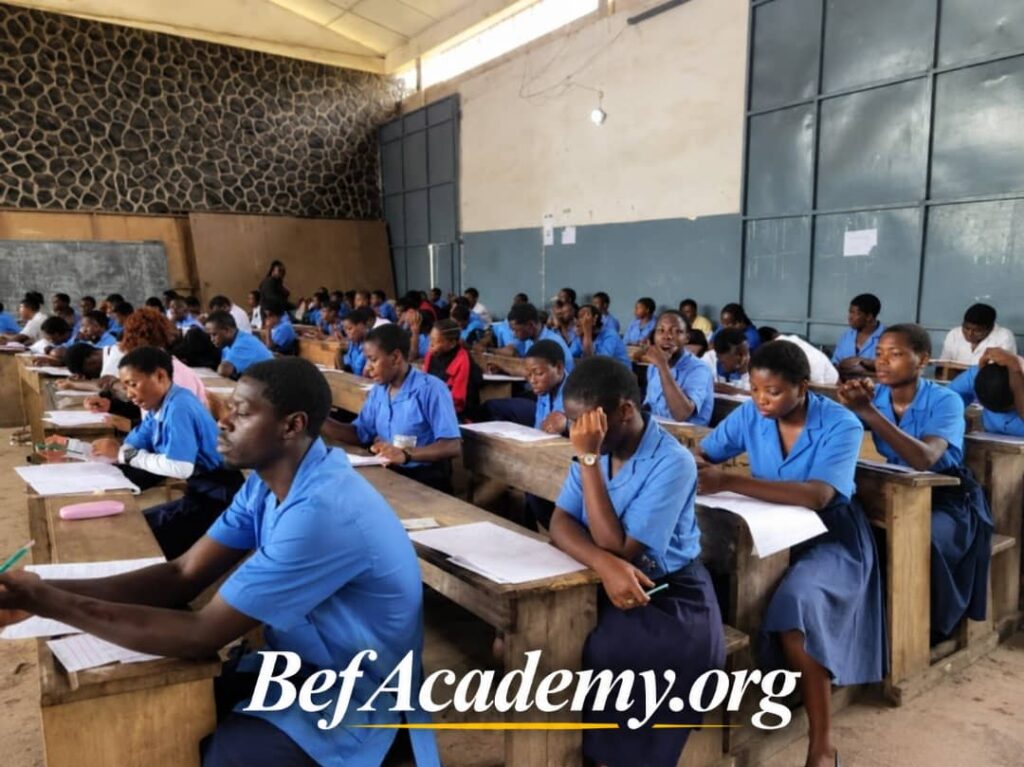
“𝑻𝒉𝒐𝒖𝒔𝒂𝒏𝒅𝒔 𝒐𝒇 𝒄𝒂𝒏𝒅𝒊𝒅𝒂𝒕𝒆𝒔 𝒅𝒆𝒑𝒆𝒏𝒅 𝒐𝒏 𝒂 𝒇𝒂𝒊𝒓 𝒂𝒏𝒅 𝒄𝒓𝒆𝒅𝒊𝒃𝒍𝒆 𝒆𝒙𝒂𝒎𝒊𝒏𝒂𝒕𝒊𝒐𝒏 𝒔𝒚𝒔𝒕𝒆𝒎 𝒕𝒐 𝒔𝒆𝒄𝒖𝒓𝒆 𝒕𝒉𝒆𝒊𝒓 𝒂𝒄𝒂𝒅𝒆𝒎𝒊𝒄 𝒇𝒖𝒕𝒖𝒓𝒆.”