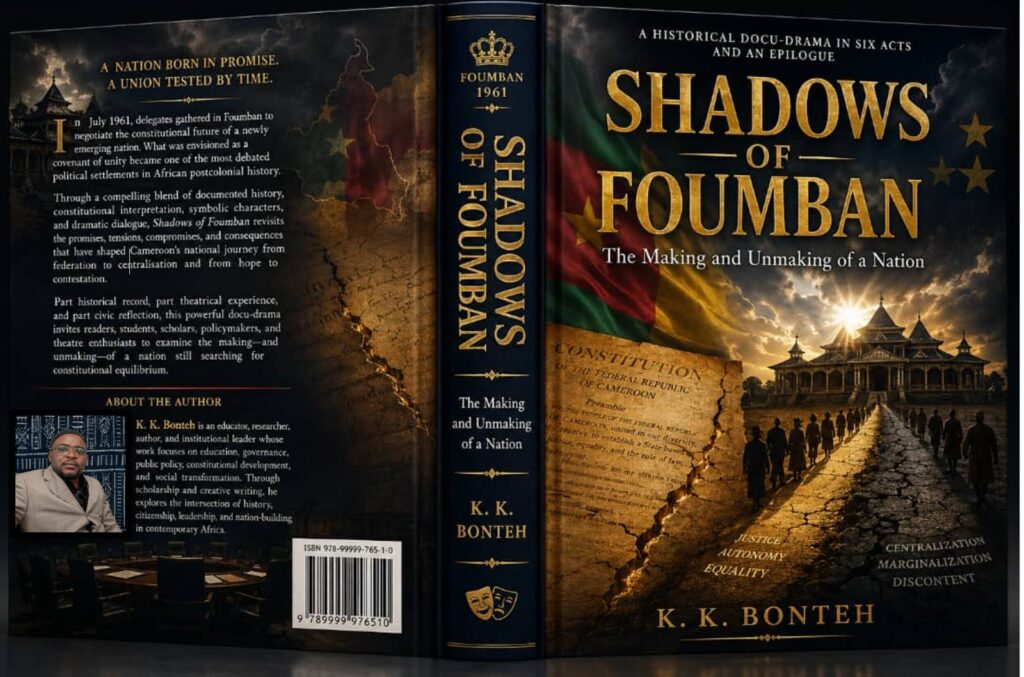

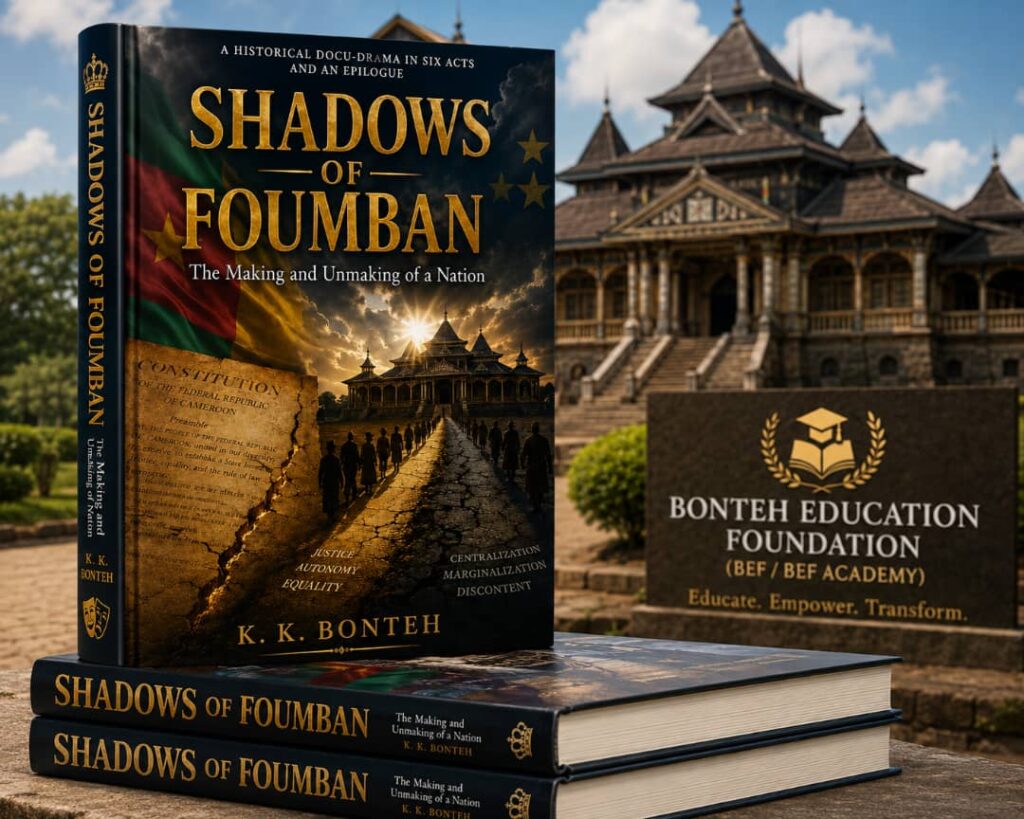
𝑺𝑯𝑨𝑫𝑶𝑾𝑺 𝑶𝑭 𝑭𝑶𝑼𝑴𝑩𝑨𝑵: 𝑻𝑯𝑬 𝑴𝑨𝑲𝑰𝑵𝑮 𝑨𝑵𝑫 𝑼𝑵𝑴𝑨𝑲𝑰𝑵𝑮 𝑶𝑭 𝑨 𝑵𝑨𝑻𝑰𝑶𝑵 𝒂𝒔 𝒂 𝑪𝒐𝒏𝒔𝒕𝒊𝒕𝒖𝒕𝒊𝒐𝒏𝒂𝒍 𝑻𝒓𝒂𝒈𝒆𝒅𝒚
𝗜𝗡𝗧𝗥𝗢𝗗𝗨𝗖𝗧𝗜𝗢𝗡
𝑺𝒉𝒂𝒅𝒐𝒘𝒔 𝒐𝒇 𝑭𝒐𝒖𝒎𝒃𝒂𝒏: 𝑻𝒉𝒆 𝑴𝒂𝒌𝒊𝒏𝒈 𝒂𝒏𝒅 𝑼𝒏𝒎𝒂𝒌𝒊𝒏𝒈 𝒐𝒇 𝒂 𝑵𝒂𝒕𝒊𝒐𝒏 by K. K. Bonteh is a historical docu-drama that dramatises one of the most significant constitutional moments in modern Cameroonian history: the Foumban Constitutional Conference of 1961 and its aftermath. Drawing upon historical records, constitutional debates, allegorical representation, and political theatre, the play transforms history into dramatic literature.
As a constitutional tragedy, the play explores the tension between constitutional promises and political realities. It presents the gradual erosion of a constitutional covenant and examines how differing interpretations of nationhood, federalism, unity, and governance contribute to national disillusionment. The tragedy does not centre on an individual hero but on a nation and its constitutional aspirations.
𝗧𝗛𝗘 𝗡𝗔𝗧𝗜𝗢𝗡 𝗔𝗦 𝗧𝗛𝗘 𝗧𝗥𝗔𝗚𝗜𝗖 𝗣𝗥𝗢𝗧𝗔𝗚𝗢𝗡𝗜𝗦𝗧
Unlike classical tragedies such as Shakespeare’s King Lear and Julius Caesar, where individual characters dominate the dramatic action, Shadows of Foumban elevates the nation itself to the status of protagonist.
The drama follows the constitutional journey of Cameroon from hope and expectation toward uncertainty and conflict. The nation becomes the tragic figure whose aspirations for unity, justice, diversity, and constitutional balance encounter challenges over time.
The tragedy therefore becomes collective rather than personal. Entire communities, institutions, and generations participate in and suffer from the consequences of constitutional developments.
𝗧𝗛𝗘 𝗧𝗥𝗔𝗚𝗘𝗗𝗬 𝗢𝗙 𝗧𝗛𝗘 𝗖𝗢𝗡𝗦𝗧𝗜𝗧𝗨𝗧𝗜𝗢𝗡
Perhaps the most powerful tragic element is embodied in the character of The Constitution.
Through allegorical personification, Bonteh transforms the Constitution into a living dramatic figure. Its lament, “I am being rewritten,” symbolises the vulnerability of constitutional agreements to political reinterpretation.
In classical tragedy, the protagonist often experiences a fall from greatness. In Shadows of Foumban, the Constitution itself undergoes a symbolic decline:
■ It begins as a covenant of hope.
■ It becomes a subject of contestation.
■ It gradually loses its original meaning for different stakeholders.
■ It stands trial before history.
The constitutional document thus functions as a tragic hero whose authority and integrity are increasingly challenged.
𝗖𝗢𝗡𝗦𝗧𝗜𝗧𝗨𝗧𝗜𝗢𝗡𝗔𝗟 𝗕𝗘𝗧𝗥𝗔𝗬𝗔𝗟 𝗔𝗦 𝗧𝗛𝗘 𝗧𝗥𝗔𝗚𝗜𝗖 𝗖𝗢𝗡𝗙𝗟𝗜𝗖𝗧
The central conflict of the drama emerges from competing understandings of constitutional promises.
The Foumban Conference is portrayed as a meeting of visions:
■ Federal autonomy.
■ National unity.
■ Cultural diversity.
■ Shared sovereignty.
The tragedy develops when participants and later generations interpret these principles differently.
Rather than portraying clear villains and heroes, Bonteh presents constitutional history as a field of ambiguity, misunderstanding, negotiation, and power struggles.
The resulting constitutional tensions generate feelings of exclusion, distrust, and disappointment.
𝗠𝗘𝗠𝗢𝗥𝗬 𝗔𝗦 𝗔 𝗧𝗥𝗔𝗚𝗜𝗖 𝗙𝗢𝗥𝗖𝗘
One of the most original features of the play is the character Memory.
Memory functions as a witness, archivist, and moral conscience. Unlike ordinary dramatic characters, Memory cannot forget.
Throughout the play, Memory
continually recalls:
■ Past promises.
■ Historical agreements.
■ Constitutional expectations.
■ Unresolved grievances.
This role transforms Memory into a tragic force because it prevents society from escaping its past.
The drama therefore suggests that constitutional wounds do not disappear simply because political leaders declare them resolved.
History remains present.
Memory remains active.
The past continues to shape the future.
𝗧𝗛𝗘 𝗧𝗥𝗜𝗔𝗟 𝗢𝗙 𝗧𝗛𝗘 𝗖𝗢𝗡𝗦𝗧𝗜𝗧𝗨𝗧𝗜𝗢𝗡
The climax of the drama, the Trial of the Constitution, exemplifies constitutional tragedy at its highest level.
In traditional tragedy, judgment often leads to resolution.
Bonteh deliberately subverts this expectation.
The trial ends with a “Judgment Without Verdict.”
This dramatic choice reflects a profound understanding of constitutional history:
■ Historical debates remain unresolved.
■ National identity remains contested.
■ Constitutional interpretation remains ongoing.
The absence of a final verdict symbolises the continuing nature of the constitutional question itself.
The audience is therefore invited to become judges and participants in the national conversation.
𝗧𝗛𝗘 𝗧𝗥𝗔𝗚𝗘𝗗𝗬 𝗢𝗙 𝗟𝗢𝗦𝗧 𝗖𝗢𝗡𝗦𝗧𝗜𝗧𝗨𝗧𝗜𝗢𝗡𝗔𝗟 𝗙𝗔𝗜𝗧𝗛
The play repeatedly raises an important question:
Can a nation survive when citizens lose faith in the constitutional covenant that binds them together?
This question represents the deepest tragic concern of the drama.
The tragedy is not merely that constitutional changes occur.
Rather, it is that confidence in constitutional guarantees gradually weakens.
As trust declines, tensions increase.
As tensions increase, national cohesion becomes more fragile.
The drama therefore portrays constitutional faith as the invisible foundation of nationhood.
𝗔𝗟𝗟𝗘𝗚𝗢𝗥𝗬 𝗔𝗡𝗗 𝗧𝗥𝗔𝗚𝗜𝗖 𝗦𝗬𝗠𝗕𝗢𝗟𝗜𝗦𝗠
Bonteh employs extensive allegory to deepen the tragic dimension of the work.
Characters such as:
■ The Constitution
■ Memory
■ Justice
■ Unity
■ The State
represent ideas rather than ordinary individuals.
These symbolic figures elevate the drama from historical reconstruction to philosophical reflection.
The audience is encouraged to view constitutional history not only as a sequence of events but also as a moral struggle involving truth, justice, memory, legitimacy, and collective responsibility.
𝗖𝗢𝗡𝗖𝗟𝗨𝗦𝗜𝗢𝗡
𝑺𝒉𝒂𝒅𝒐𝒘𝒔 𝒐𝒇 𝑭𝒐𝒖𝒎𝒃𝒂𝒏: 𝑻𝒉𝒆 𝑴𝒂𝒌𝒊𝒏𝒈 𝒂𝒏𝒅 𝑼𝒏𝒎𝒂𝒌𝒊𝒏𝒈 𝒐𝒇 𝒂 𝑵𝒂𝒕𝒊𝒐𝒏 is best understood as a constitutional tragedy within the framework of historical docu-drama and political theatre. Through allegory, historical reconstruction, constitutional symbolism, and tragic structure, K. K. Bonteh dramatises the fate of a nation wrestling with the promises and consequences of constitutional change.
The tragedy lies not in the downfall of a single individual but in the gradual tension between constitutional ideals and political realities. By personifying institutions such as the Constitution, Memory, Justice, Unity, and the State, the playwright transforms legal debates into human experiences and historical events into moral questions.
Ultimately, the play demonstrates that constitutions are more than legal documents. They are repositories of collective hope, historical memory, and national trust. When those foundations are contested, reinterpreted, or weakened, the result is not merely political disagreement but constitutional tragedy. The play therefore stands as a significant contribution to African political theatre and constitutional literature, inviting audiences to reflect on the enduring relationship between history, memory, governance, and nationhood.