
𝗥𝗘𝗜𝗠𝗔𝗚𝗜𝗡𝗜𝗡𝗚 𝗢𝗙𝗙𝗜𝗖𝗜𝗔𝗟 𝗕𝗜𝗟𝗜𝗡𝗚𝗨𝗔𝗟𝗜𝗦𝗠 𝗜𝗡 𝗧𝗛𝗘 𝗗𝗜𝗚𝗜𝗧𝗔𝗟 𝗔𝗚𝗘
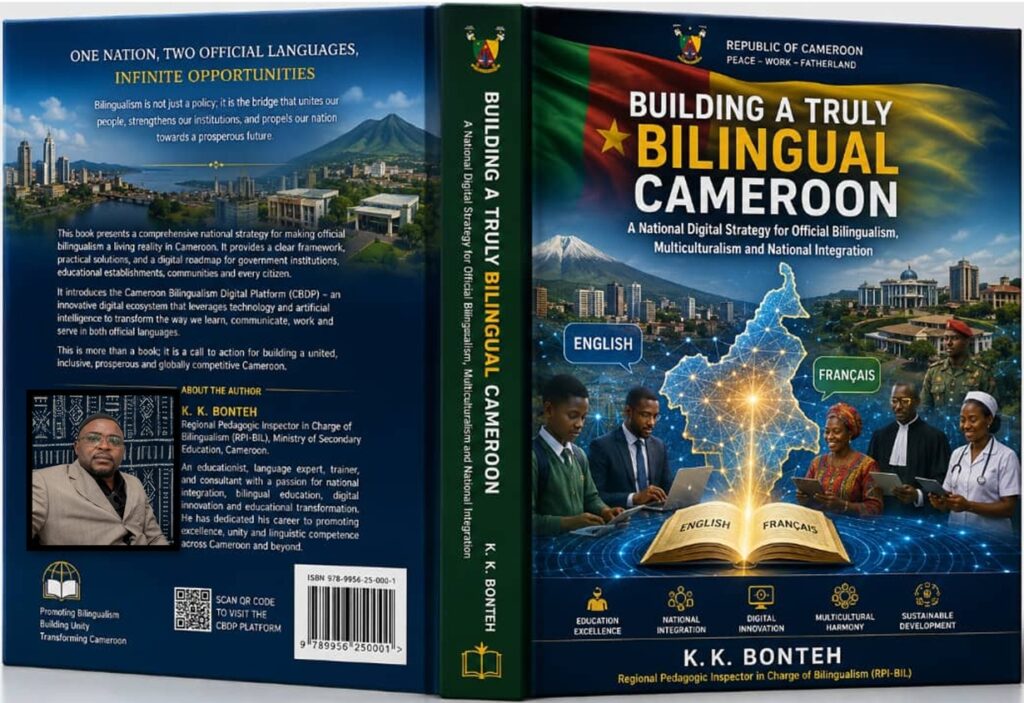
A Review of 𝗕𝘂𝗶𝗹𝗱𝗶𝗻𝗴 𝗔 𝗧𝗿𝘂𝗹𝘆 𝗕𝗶𝗹𝗶𝗻𝗴𝘂𝗮𝗹 𝗖𝗮𝗺𝗲𝗿𝗼𝗼𝗻: 𝗔 𝗡𝗮𝘁𝗶𝗼𝗻𝗮𝗹 𝗗𝗶𝗴𝗶𝘁𝗮𝗹 𝗦𝘁𝗿𝗮𝘁𝗲𝗴𝘆 𝗳𝗼𝗿 𝗢𝗳𝗳𝗶𝗰𝗶𝗮𝗹 𝗕𝗶𝗹𝗶𝗻𝗴𝘂𝗮𝗹𝗶𝘀𝗺, 𝗠𝘂𝗹𝘁𝗶𝗰𝘂𝗹𝘁𝘂𝗿𝗮𝗹𝗶𝘀𝗺 𝗮𝗻𝗱 𝗡𝗮𝘁𝗶𝗼𝗻𝗮𝗹 𝗜𝗻𝘁𝗲𝗴𝗿𝗮𝘁𝗶𝗼𝗻 by K. K. Bonteh
In an era characterised by rapid technological transformation, increasing linguistic mobility, and renewed debates on national cohesion, K. K. Bonteh’s 𝗕𝘂𝗶𝗹𝗱𝗶𝗻𝗴 𝗔 𝗧𝗿𝘂𝗹𝘆 𝗕𝗶𝗹𝗶𝗻𝗴𝘂𝗮𝗹 𝗖𝗮𝗺𝗲𝗿𝗼𝗼𝗻 emerges as a timely, ambitious, and intellectually engaging contribution to contemporary discussions on language policy, education, governance, and nation-building in Cameroon. Far more than a conventional study of official bilingualism, the work offers a comprehensive national framework that integrates constitutional principles, educational reform, public administration, digital transformation, artificial intelligence, and multicultural citizenship into a coherent vision for the future.
The book is situated within a long tradition of scholarship on language and national identity. Readers will readily discern echoes of Benedict Anderson’s concept of the nation as an “imagined community,” as well as the language-planning perspectives of Joshua Fishman and the sociolinguistic interventions of David Crystal. Yet Bonteh departs from much of the existing literature by refusing to treat bilingualism merely as a linguistic phenomenon. Instead, he presents it as a strategic developmental asset and a national integration mechanism capable of strengthening social cohesion, economic competitiveness, democratic participation, and educational excellence.
One of the book’s most significant strengths lies in its interdisciplinary scope. While many publications on Cameroon’s bilingual experience focus narrowly on constitutional provisions, educational challenges, or sociolinguistic tensions, Bonteh synthesises these dimensions into a unified national strategy. The historical chapters provide a lucid account of the trajectory from pre-colonial diversity through German colonisation, Anglo-French partition, reunification, and contemporary nation-building. The discussion demonstrates a sophisticated appreciation of the historical foundations upon which Cameroon’s bilingual identity rests.
Particularly noteworthy is the author’s insistence that official bilingualism should be understood not as a burden inherited from colonial history but as a strategic advantage in an increasingly interconnected world. In this respect, the book invites comparison with Canada’s implementation of the Official Languages Act, Switzerland’s management of multilingual federalism, Singapore’s language-based developmental model, and Rwanda’s deliberate language reforms aimed at repositioning the country within global economic networks. Like these national projects, Bonteh’s work recognises language as a form of social and economic capital rather than merely a medium of communication.
The most innovative aspect of the publication is undoubtedly its emphasis on digital transformation and artificial intelligence. The proposed Cameroon Bilingualism Digital Platform (CBDP) represents a bold attempt to reimagine language policy through technology. By envisioning a national digital ecosystem supporting language learning, translation, certification, institutional monitoring, research, and citizen engagement, the author moves beyond traditional policy discourse into the realm of practical implementation. This proposal bears comparison with Estonia’s digital governance initiatives, Singapore’s Smart Nation programme, and multilingual educational technology projects increasingly deployed across Europe and Asia. Yet Bonteh’s framework remains firmly rooted in Cameroon’s specific realities and developmental aspirations.
The book’s treatment of bilingualism as a peace-building and nation-building instrument is equally compelling. Against the backdrop of contemporary debates concerning national integration and social cohesion, the author argues persuasively that language accessibility, educational equity, and institutional inclusiveness are indispensable components of democratic governance. In doing so, he broadens the discussion beyond linguistic competence to encompass citizenship, participation, and belonging. This human-centred perspective gives the work both scholarly relevance and practical significance.
If there is a limitation, it is perhaps that the visionary scope of some proposals may require substantial institutional commitment, financial investment, and inter-ministerial coordination to become fully operational. However, this observation should not be regarded as a criticism so much as an indication of the scale of the national transformation the author seeks to inspire. Visionary policy frameworks are seldom judged solely by immediate feasibility; their value often lies in their ability to shape future possibilities.
Overall, 𝗕𝘂𝗶𝗹𝗱𝗶𝗻𝗴 𝗔 𝗧𝗿𝘂𝗹𝘆 𝗕𝗶𝗹𝗶𝗻𝗴𝘂𝗮𝗹 𝗖𝗮𝗺𝗲𝗿𝗼𝗼𝗻 stands as a significant contribution to scholarship and public policy. It is simultaneously a policy proposal, an educational manifesto, a technological roadmap, and a call for renewed national commitment. For scholars of sociolinguistics, language policy, educational reform, governance, and African development, the book offers fertile ground for reflection and debate. For policymakers and practitioners, it provides a practical framework for transforming constitutional aspirations into measurable realities. Above all, it reminds readers that the future of bilingualism in Cameroon will depend not merely on laws and declarations, but on innovation, collective action, and a shared national vision.
𝗔𝗯𝗼𝘂𝘁 𝘁𝗵𝗲 𝗔𝘂𝘁𝗵𝗼𝗿
K. K. Bonteh is a Cameroonian educator, pedagogic inspector, language specialist, researcher, author, and educational innovator. With extensive experience in bilingual education, curriculum development, educational leadership, and public policy, he has dedicated much of his professional career to advancing official bilingualism, national integration, educational transformation, and digital innovation. Through this work, he contributes an ambitious and forward-looking vision for strengthening multilingual citizenship and inclusive national development in Cameroon.