
Description
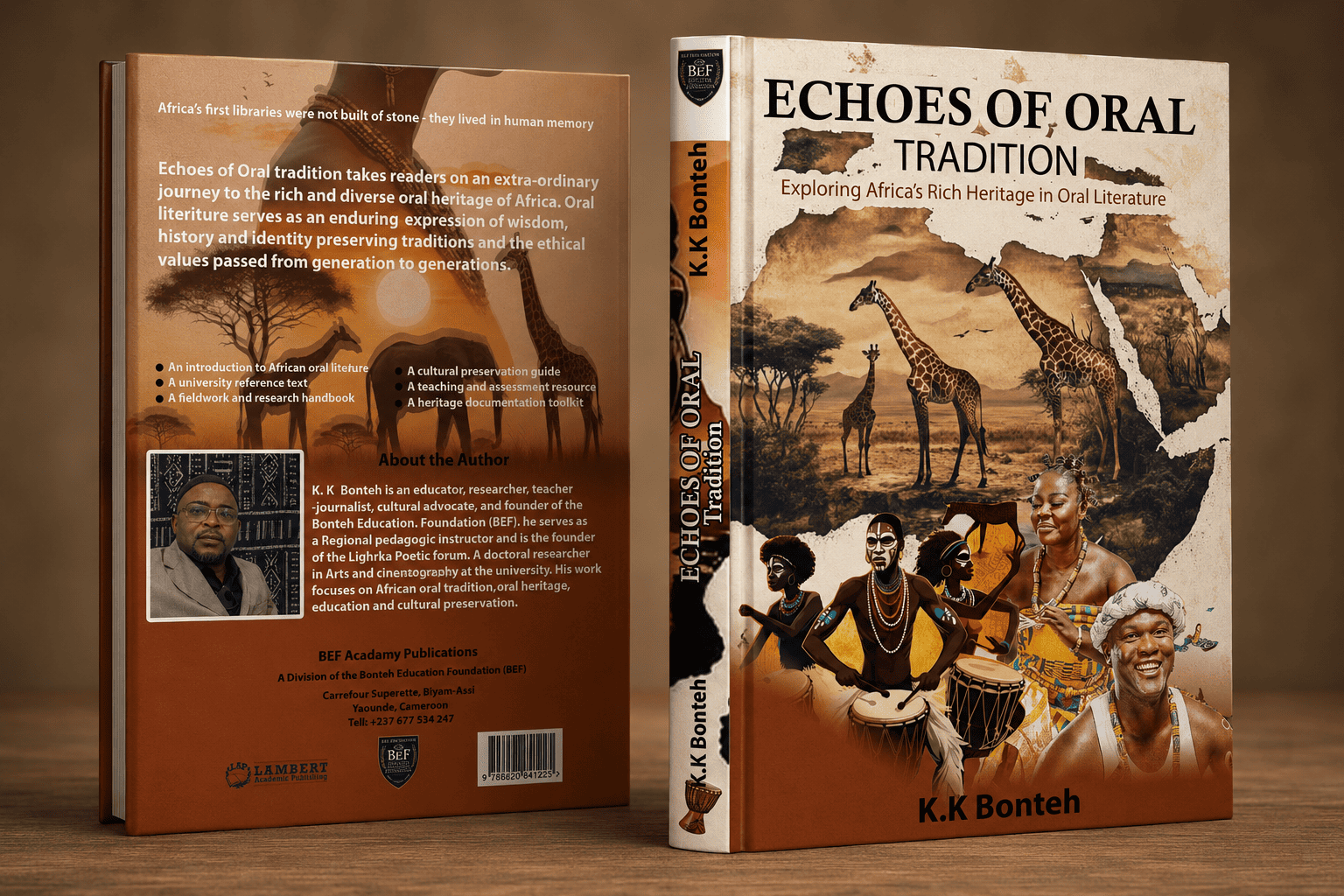
Africa’s stories have always traveled by voice before they traveled by page, and this African oral tradition book sets out to honor that order. Echoes of Oral Tradition, written by K.K. Bonteh, gathers folklore, proverb, song, and ancestral wisdom into a single volume built to celebrate just how much of African cultural identity still lives in spoken memory rather than printed text.
What makes this African oral tradition book valuable beyond nostalgia is its insistence on treating oral heritage as a living discipline, not a museum piece. Oral tradition, as documented across African societies and beyond, functions as a genuine medium of communication, carrying history, law, and cultural knowledge across generations without ever needing a writing system to survive. Bonteh’s collection draws directly on that long, well-documented practice, showing how stories told aloud carry as much intellectual weight as anything written down.
The book moves comfortably between registers, pairing folktales with the proverbs that explain them and songs with the ceremonies that gave them meaning. Rather than presenting oral heritage as a single uniform tradition, Bonteh highlights the range across African storytelling, from trickster tales meant to teach children caution to praise songs meant to honor elders and leaders. That range is part of what makes this collection function as a genuine reference rather than a quick survey.
Students and researchers get particular value here. Bonteh structures the material so that academic readers can trace recurring motifs, compare storytelling techniques across regions, and use the book as a primary entry point into African oral literature more broadly. Educators preparing lessons on African culture, identity, or comparative literature will find ready-made material that does not require translating dense theory into something a classroom can actually use.
The book also speaks to something more urgent than scholarship. Oral traditions across the continent face genuine pressure from urbanization, migration, and the slow fading of fluent storytellers, the very walking libraries who once carried this knowledge from one generation to the next. Echoes of Oral Tradition treats every story it preserves as an act of cultural continuity, not just an entertaining read, and that urgency gives the book a weight beyond its modest page count.
For lovers of African literature without any academic agenda, the book still rewards a simple cover to cover read. Bonteh’s prose stays close to the rhythm of spoken storytelling, so the folktales and proverbs collected here read the way they were meant to be experienced, aloud, in community, passed from one listener to the next. That fidelity to voice is rare in collections that try to formalize oral material into print, and it is the quality that keeps readers coming back to specific stories long after they finish the book.
The book also pays attention to structure in a way that makes it easy to use, not just read once and shelve. Bonteh organizes the material by theme and region rather than dumping every story into one undifferentiated mass, so a reader looking for trickster tales, creation stories, or praise poetry can move straight to what they need. That organization matters for the classroom and the research desk alike, turning a collection that could have been purely anecdotal into something closer to a working reference text, one that rewards repeat visits as much as a single read.
Echoes of Oral Tradition belongs on the same shelf as the rest of K.K. Bonteh’s catalogue exploring Cameroonian and African identity, available through the full book collection at BEF Academy Publications. This African oral tradition book is available now for only 10,000 FCFA. Few collections manage to feel this personal while covering so much cultural ground, and that balance is exactly why it keeps finding new readers among students, researchers, and storytellers alike.
Reviews
There are no reviews yet.