Description
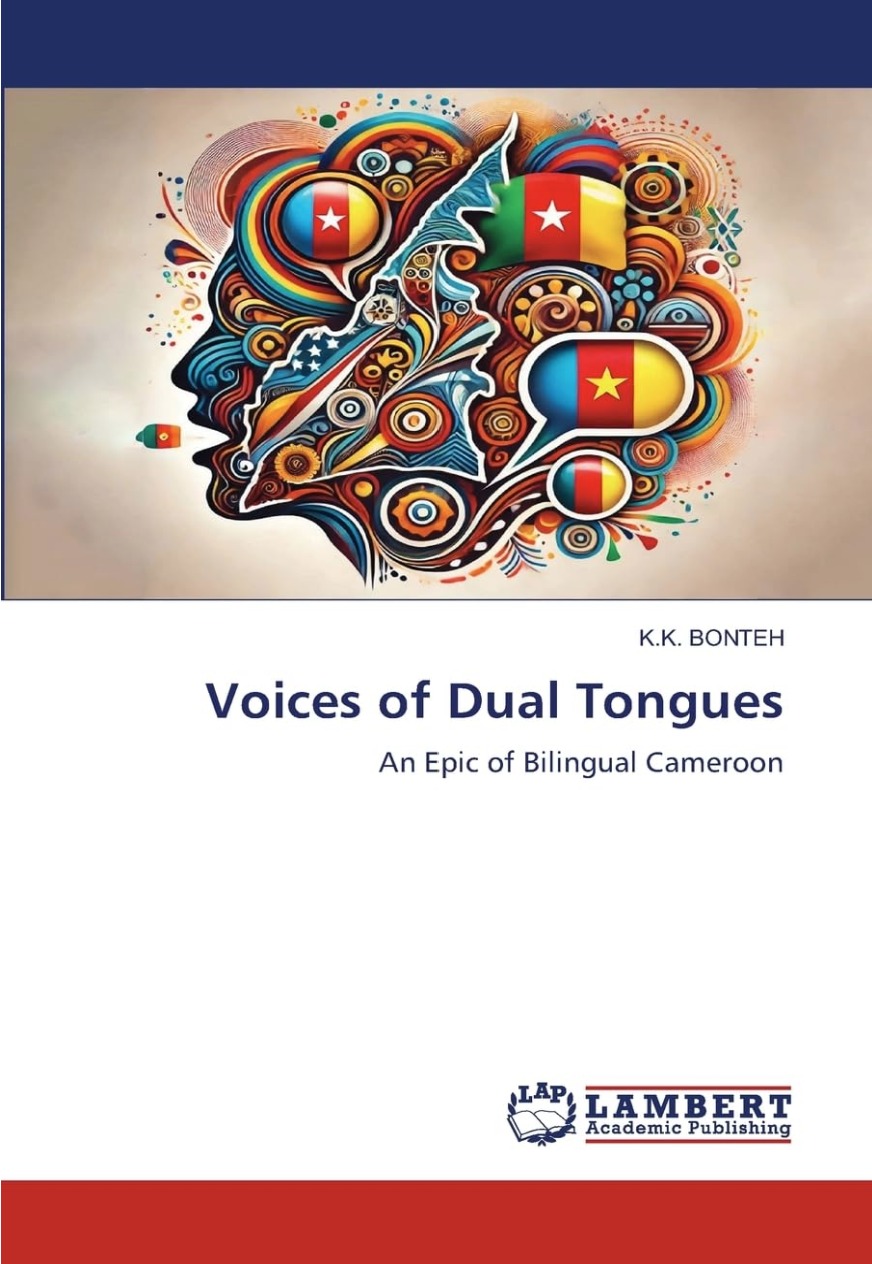
Few literary projects try to hold an entire nation’s linguistic identity in one hand, but that is precisely the ambition behind this bilingual Cameroon poetry collection. Voices of Dual Tongues: An Epic of Bilingual Cameroon, written by K.K. Bonteh, weaves ancient and modern language together into a single vivid tapestry, tracing Cameroon’s journey as a country shaped by two colonial tongues and dozens of indigenous ones.
What distinguishes this bilingual Cameroon poetry from a simple celebration of multilingualism is its honesty about where that multilingualism comes from. Bonteh does not shy away from the echoes of colonial legacy that gave French and English their outsized place in Cameroonian life. The verse confronts that history directly, even as it finds genuine beauty in the linguistic complexity it produced.
That complexity is not exaggerated for effect. Cameroon is genuinely home to hundreds of languages alongside its two official tongues, French and English, a reality that has shaped the country’s politics, education, and daily life for generations. Bonteh’s epic draws its tension and its hope from that same real linguistic landscape, turning a documented national reality into deeply felt verse.
The poem’s emotional core lies in its refusal to pick a side between French and English, or between the colonial languages and the indigenous voices standing alongside them. Instead, this bilingual Cameroon poetry treats the clash itself as material for art, finding harmony in friction rather than pretending the friction does not exist. Striking imagery carries readers from the scars of division toward a hopeful, if hard-won, path to reconciliation.
Bonteh’s verse also makes space for the resilience of indigenous languages that rarely get top billing in conversations about Cameroon’s bilingual identity. Their presence in the epic is a reminder that the French and English debate, however dominant, is only one layer of a much richer linguistic story. That inclusion gives the collection a depth that purely political bilingual narratives often miss.
The collection also speaks directly to anyone trying to make sense of identity in a country shaped by competing histories. Cameroon’s bilingual reality did not arrive by accident, and Voices of Dual Tongues does not pretend otherwise. It treats the legacy of two separate colonial administrations as something to be examined honestly, not smoothed over for the sake of a tidy national story. At the same time, the verse never collapses into pure grievance. Bonteh keeps returning to moments of genuine connection between French and English speakers, between coastal cities and highland villages, between generations who experienced colonial rule directly and those who only inherited its aftermath. That balance, between honest reckoning and hopeful imagination, is what separates this epic from a simple history lesson in verse. Readers studying Cameroonian literature, students of postcolonial poetry, and anyone who has ever felt pulled between two languages or two cultures will find a great deal to sit with here. The poem does not resolve the tension neatly, because that tension is still very much alive in Cameroon today, but it offers something more valuable than resolution: a way of holding the complexity without losing hope.
Voices of Dual Tongues is more than literature. It is an invitation to witness the strength, creativity, and boundless spirit of a people who have turned linguistic division into a source of power and beauty. It belongs on the same shelf as the rest of K.K. Bonteh’s work exploring Cameroonian identity, available through the full book collection at BEF Academy Publications. This bilingual Cameroon poetry epic is available now for only 5,000 FCFA. Few collections manage to feel this personal while still speaking for an entire nation, and that is the achievement at the heart of this epic.
Reviews
There are no reviews yet.